
- News
- City News
- ahmedabad News
- A journey through Indian art
Trending
This story is from September 11, 2007
A journey through Indian art
In town for an exhibition, Mumbai-based artist Pratima Sheth talks to AT about art, its dictionary and more

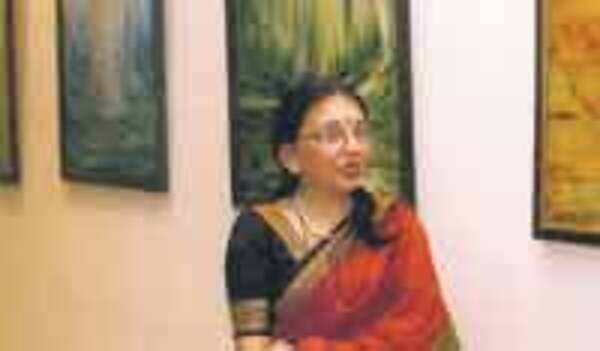
“Ahmedabad is like my home-town,” begins Mumbai-based artist Pratima Sheth, as she leads you for a dekko at her drawings and paintings displayed in a city gallery. Her drawings are lucid, while her semi-abstract landscape paintings in oil capture attention.

Even as most of us go through the customary dilemma of choosing an appropriate career for life, Pratima says she never had any doubts. “I immersed myself into art when I was three years old.
I had staunch support in the form of my father, who would even ask people to get me colours from abroad.” Soon, she enrolled in the JJ School of Arts. “Those five years in JJ really opened my world and gave me a lot of exposure,” says Pratima, who tied the knot with her businessman husband while still in college.
She takes the opportunity to add, “My in-laws were very supportive of my art, which is why I could carry on with it. I strongly feel that women should pursue a career, and the key to success here is time management.”
As she travelled abroad with her husband often, she even studied art in many European countries. “The subjects were same, but in those universities the emphasis was more on language and history,” she adds.
It was on one such visit that she came to be gifted a dictionary of European art, which set her thinking. After rigorous research and data collection for ten years, Pratima launched a dictionary on Indian art and artists in 2006.
“There was no compilation of the evolution and context of Indian art and people could not recognise beyond 10-15 artists. This dictionary, which will also see a second part, includes close to 650 Indian artists.”
Ask her why prices of paintings are soaring and she replies, “Artists are not becoming commercial, art is. That’s because there are more collectors now. Also, considering everything has become expensive over the years, why not art?”
End of Article
FOLLOW US ON SOCIAL MEDIA










Photostories

Hot Picks
TOP TRENDING
Popular Categories
Hot on the Web
Top Trends
Hurricane MiltonRatan Tata NewsNew UPI Transaction LimitRatan Tata DiesPM ModiRafael NadalShantanu NaiduTom BradyStock Market TodayNarayana MurthyEngland Cricket Team New RecordRatan Tata Inspiring QuotesManagement Colleges of IndiaTop Medical Colleges of IndiaTop Engineering Colleges of IndiaTop Pharmacy Colleges of IndiaLive Cricket Score
Trending Topics
Diwali WishesBigg Boss Tamil 8 Contestants ListDussehra WishesVettaiyan Twitter ReviewSanjay Leela BhansaliVettaiyan ReviewSalman KhanDevara CollectionBigg Boss 18Deepika PadukoneShraddha KapoorRatan Tata Passed AwayColdplayVettaiyan Movie ReviewSwatantrya Veer SavarkarDussehra 2024Watch NFL Live StreamDress To ImpressRatan Tata DeathWordle Answer
Living and entertainment
Latest News
All-Star Tower Defense (ASTD) Codes October 2024Ranveer Singh: I have a man crush on Tiger ShroffWho is Noel Tata? Meet Ratan Tata’s half-brother, who could be successor at Tata TrustsHow to make Ginger Turmeric Shots for seasonal changeWhen Amitabh Bachchan slept on Marine Drive with rats as neighbours: I didn’t have a place to stayEthel Kennedy, widow of Senator Robert F Kennedy Sr suffers stroke in sleep, hospitalised'Stree 2' hits OTT after record-breaking box office success: Here’s where to watch!Da Hood Codes October 2024: Unlock new weapons to elevate your gameplayTriple centurion Harry Brook happy to break Dad's club record'Thalapathy 69': Here's how much Vijay will be earning in his last film!Happy Dussehra 2024: Top 50 Wishes, Messages, and Quotes to Share with Your Loved OnesHow The Tarot Suit Can Be Associated With The Elements'You're drunk': Britons stunned by BBC app's shocking 18,995 mph wind forecast!Hanging Lights For Living Room: Transform and Illuminate Your SpaceArko: The reach of Bollywood is greater than single albumsExclusive- Iss Ishq Ka Rab Rakha fame Shalini Kapoor Sagar on celebrating Navratri festivities says, "We will be shooting the Durga Puja track soon"Leaders of 24 countries, UN chief to attend BRICS summit: KremlinOnly a true creative genius can spot the odd unicorn in 12 seconds!
Copyright © 2024 Bennett, Coleman & Co. Ltd. All rights reserved. For reprint rights: Times Syndication Service